

Erased.
The bill removes “homosexuality” and “bisexuality” from Tasmania’s Anti-Discrimination Act.
Why Sex Matters
Sex is one of the most basic human characteristics. We are all born male or female, and that sex remains with us throughout our lives.
Sexual orientation is about which sex we are attracted to. If you’re heterosexual, you’re attracted to the opposite sex. If you’re homosexual, you’re attracted to the same sex. If you’re bisexual, you're attracted to both sexes.
For everyone, that distinction matters. For lesbians, gay men and bisexual people in particular, our rights were won on the basis of same-sex attraction. That's why it matters that sexual orientation is clearly recognised and defined to protect us in law.
Tasmania’s proposed bill changes that.
What the Bill Changes
The Law Today
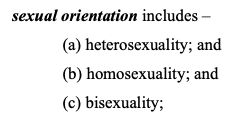
Anti-Discrimination Act 1998 (Tas), section 3
Under the Bill
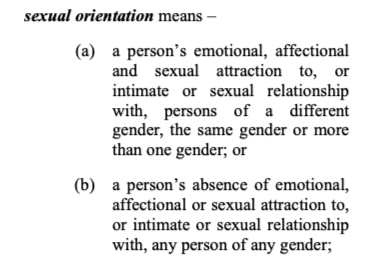
Conversion Practices Prohibition Bill 2026 (No. 45), Schedule 1
Homosexuality and bisexuality are removed. The word "sex" does not appear.
The current Act explicitly recognises heterosexuality, homosexuality and bisexuality. The bill removes those terms from the legal definition and replaces them with an unworkable new definition based on “gender”.
Sex is the foundation of sexual orientation. Without sex, terms like heterosexual, homosexual and bisexual lose their meaning.
Gender is based on a self-asserted identity and stereotypes about women and men. It is subjective, difficult to define and varies greatly between people and cultures.
A bill to protect gay people that erases gay people.
Replacing sex with gender changes what sexual orientation means. It moves the definition away from the material reality of sex.
That affects heterosexual, homosexual and bisexual people alike. For LGB people, it weakens the clear legal recognition of same-sex attraction and creates new opportunities for discrimination and homophobia.
Don’t let them erase us.
Homosexuality and bisexuality belong in the law that protects us. Tell Tasmania to keep sexual orientation real.
Your Questions Answered
-
The Anti-Discrimination Act 1998 says sexual orientation includes heterosexuality, homosexuality and bisexuality. These are defined by sex, and they have protected lesbian, gay and bisexual Tasmanians since 1998.
-
Schedule 1 of the bill removes that definition. It replaces it with attraction to persons of “a different gender, the same gender or more than one gender”. The words homosexuality and bisexuality no longer appear in the Act, and neither does the word “sex”.
-
Sex is the foundation of sexual orientation. Without it, the term has no meaning. Being lesbian, gay or bisexual means being attracted to people of the same sex, and our rights were won on that basis. Replacing sex with gender moves the definition away from the material reality of sex.
-
The bill doesn’t say. Neither does the Anti-Discrimination Act, which defines only “gender identity”, a person’s sense of self. Under Tasmania’s Births, Deaths and Marriages Registration Act, gender can be changed by statutory declaration, with no medical requirement, and includes “non-binary” and any self-description.
There is no consistent definition of gender in Tasmanian law, or across Australian states. Definitions vary from Act to Act, and many come from government strategy reports shaped by consultation with lobby groups rather than from Parliament itself.
Building sexual orientation on a term this unsettled makes the law less clear for everyone.
-
Tasmania’s Anti-Discrimination Commissioner proposed it in her submission, as a definition for the conversion practices bill only.
-
No. The change wasn’t in the draft bill released for consultation.
The Greens used the Tasmania’s Anti-Discrimination Commissioner's submission to rewrite the Anti-Discrimination Act itself, which affects all discrimination law in Tasmania.
-
We do not agree the being lesbian, gay or bisexual is outdated.
The Commissioner said the existing definition was “outdated” because it does not expressly include identities such as "asexual" and "aromantic" and does not reflect the broader terminology now used by some Australian jurisdictions and Tasmanian Government agencies. The Commissioner therefore recommended replacing it with a new definition based on “gender”.
Importantly, the submission did not explain why recognising identities such as asexual and aromantic required removing the existing sexual orientation terms “heterosexuality”, “homosexuality” and “bisexuality”.
-
That was the stated aim. But people with asexual identities etc. can be included without removing homosexual and bisexual people. NSW’s 2024 conversion practices law defines sexual orientation by sex and even adds “a lack of sexual attraction” as an identity. Tasmania’s bill instead deletes homosexuality and bisexuality.
-
The Commissioner's submission pointed to three existing laws as possible models for a “contemporary” definition of sexual orientation: the Equal Opportunity Act 2010 (Vic), the Sex Discrimination Act 1984 (Cth), and the Anti-Discrimination Act 1992 (NT).
It also referred to recommendations from the Victorian review of conversion-practices legislation and Tasmanian community feedback about expressly including people with asexual and aromantic identities.
-
No. They use materially different definitions.
Commonwealth (Sex Discrimination Act 1984): sex-based. Attraction to people of the same sex, a different sex, or both.
Victoria (Equal Opportunity Act 2010): gender-based. Attraction to people of a different gender, the same gender, or more than one gender. “Gender” isn’t defined.
Northern Territory (Anti-Discrimination Act 1992): gender-identity-based. Attraction to people of the same "gender identity", a different "gender-identity", or more than one "gender-identity."
The Commissioner had a sex-based option in the federal law, and recommended a gender-based wording instead.
-
NSW keeps the definition explicitly sex-based. Under the Conversion Practices Ban Act 2024 (NSW), sexual orientation means a person’s sexual orientation towards:
people of the same sex
people of a different sex
people of the same sex and a different sex
or no sexual attraction
-
No. NSW introduced a conversion-practices ban while keeping sexual orientation explicitly sex-based. That shows Tasmania does not need to replace homosexuality and bisexuality with a gender-based definition in order to prohibit genuine conversion practices.
That makes NSW a useful comparison for Tasmania.
-
That is one of our central objections.
The bill is presented as protecting people from attempts to change or suppress sexual orientation, yet it removes “homosexuality” and “bisexuality” from the legal definition of sexual orientation itself.
We do not think protecting people from conversion practices requires erasing those terms from the law.
-
It weakens the clear legal recognition of same-sex attraction, the basis of our protections. That creates major new openings for discrimination and homophobia.
-
The bill removes the existing legal terms heterosexuality, homosexuality and bisexuality and replaces them with a definition based on “gender”. That changes the legal meaning of sexual orientation for everyone, not just LGB people.
-
Keep the current definition, or adopt the NSW wording, which is based on sex and includes people with asexual identities. Either way, homosexuality and bisexuality stay in the law.
-
Tasmanians: sign the petition by 26 October. It asks the House of Assembly to reject the bill and hold a public inquiry before any new law.
Everyone: tell other lesbian, gay and bisexual people. Most don’t know their protections are about to be rewritten. Share this page, especially with friends and community groups in Tasmania, so they can sign before it closes.